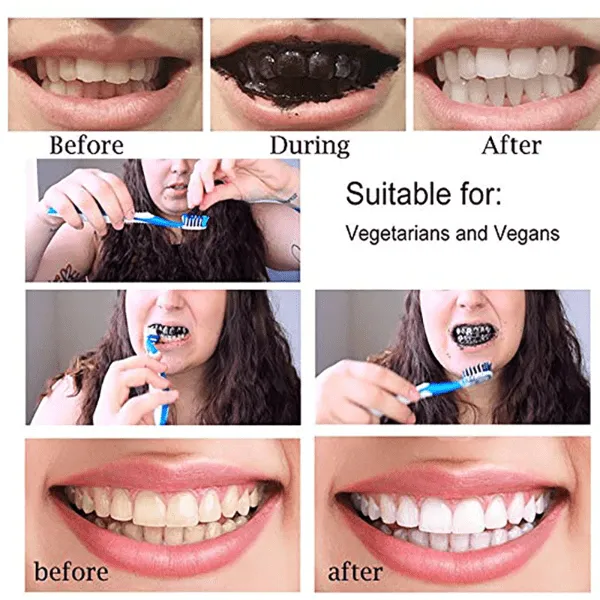
What is Charcoal Teeth Whitening Powder?
Charcoal teeth whitening powder is a fine, black powder typically made from activated charcoal. This substance is derived from various sources like coconut shells, wood, or bamboo, that have been heated to a high temperature and then exposed to a gas to create tiny pores. This process, called activation, increases the surface area of the charcoal, making it highly absorbent. In the context of teeth whitening, activated charcoal acts as a gentle abrasive, designed to remove stains and discolouration from the surface of your teeth. It has gained significant popularity in New Zealand (NZ) and globally as a natural alternative to chemical-based whitening treatments.
How Charcoal Powder Whitens Teeth
The whitening action of charcoal powder is primarily due to its abrasive properties. As you brush your teeth with the powder, it gently scrubs away surface stains caused by things like coffee, tea, wine, and tobacco. The porous nature of the activated charcoal also helps to absorb these stain-causing compounds, further enhancing the cleaning effect. It is important to note that charcoal powder does not chemically alter the colour of your teeth in the same way as peroxide-based whitening treatments do. Instead, it focuses on removing the external stains to reveal the natural whiteness of your teeth. The effectiveness can vary depending on the type and severity of stains, as well as the individual’s oral hygiene habits.
The Science Behind Charcoal Whitening

While the concept of charcoal teeth whitening is widely embraced, the scientific evidence supporting its effectiveness is still evolving. The activated charcoal’s ability to absorb stains is a well-established scientific principle. Its large surface area allows it to attract and trap particles, including those causing tooth discolouration. However, the research on charcoal’s impact on teeth whitening specifically is limited and often inconclusive. Some studies suggest that charcoal can improve tooth shade, while others find no significant difference compared to using a regular toothpaste. It is essential to approach the use of charcoal powder with realistic expectations and to understand that the scientific backing may not be as strong as for more established whitening methods.
Benefits of Charcoal Teeth Whitening NZ
One of the main attractions of charcoal teeth whitening powder in NZ is its natural approach. Many people are looking for alternatives to chemical-laden products, and charcoal offers a perceived safer and more eco-friendly option. It is often free from harsh chemicals, fluoride, and artificial additives, making it suitable for those with sensitive teeth or concerns about certain ingredients. Furthermore, charcoal powder is generally affordable, making it accessible to a wider range of consumers. Users often report a noticeable improvement in teeth brightness and a feeling of cleaner teeth after using the powder. It can also contribute to fresher breath due to its absorbent properties, helping to remove odour-causing bacteria. Ultimately, the benefits are subjective, but the appeal of a natural, cost-effective whitening solution is a major factor in its popularity.
How to Use Charcoal Powder
Using charcoal powder is a simple process, but it’s essential to follow the correct steps to ensure its effectiveness and minimise any potential risks. Begin by wetting your toothbrush and dipping the bristles into the charcoal powder. Gently tap off any excess powder. Brush your teeth in small, circular motions for about 2-3 minutes, paying attention to all surfaces of your teeth. Avoid brushing too vigorously, as this could cause damage to the enamel. After brushing, rinse your mouth thoroughly with water until all traces of the black powder are gone. This may require several rinses. It is also advisable to brush your teeth with regular toothpaste afterward to ensure all charcoal particles are removed. Finally, be mindful of any potential mess, as the black powder can easily stain surfaces.
Step-by-Step Guide to Application

Here’s a more detailed step-by-step guide to using charcoal powder effectively:
Prepare your supplies Rinse your mouth to remove any loose debris. Dip your toothbrush in water Wet the bristles of your toothbrush. Apply the charcoal powder Gently dip the wet toothbrush into the charcoal powder, ensuring the bristles are coated. Brush your teeth Brush your teeth gently for 2-3 minutes, focusing on each tooth surface. Rinse your mouth thoroughly Rinse your mouth with water until the water runs clear. Brush with regular toothpaste Brush your teeth again with your regular toothpaste to remove any remaining charcoal residue. Inspect your teeth Examine your teeth to see the results. Clean up any mess Wipe down your sink and any surfaces that may have been stained.
How Often Should You Use It?
The recommended frequency of using charcoal teeth whitening powder varies, but it is generally advised to use it sparingly. Many experts suggest using it a few times per week, rather than daily. Overuse can potentially lead to enamel erosion due to its abrasive nature. Starting with once or twice a week and monitoring your teeth for any sensitivity or changes is a good approach. If you experience any discomfort or increased sensitivity, reduce the frequency or discontinue use. It is also important to incorporate regular dental check-ups and professional cleanings into your oral hygiene routine, as they play a crucial role in maintaining optimal oral health and addressing any potential issues caused by any whitening method.
Tips for Effective Whitening
To maximize the whitening effects and minimise potential downsides, consider these tips:
Choose a high-quality product: Opt for charcoal powder made from natural sources, such as coconut shells, and ensure it’s food-grade and free from additives. Brush gently Use gentle circular motions to avoid damaging your enamel. Be consistent: Regular use, as directed, is key to seeing results, but avoid overuse. Combine with other practices: Maintain good oral hygiene practices, including regular brushing with fluoride toothpaste, flossing, and using mouthwash. Stay patient: Results may not be immediate, and it can take several weeks to notice a significant difference. Follow-up with your dentist: Regular dental check-ups are essential to ensure your teeth and gums are healthy.
Potential Risks and Side Effects

While generally considered safe, charcoal teeth whitening powder does have potential risks and side effects. The abrasive nature of the powder can, in some cases, lead to enamel erosion if used too frequently or aggressively. Enamel erosion can increase tooth sensitivity and make your teeth more vulnerable to cavities. Some users may also experience temporary sensitivity after using charcoal powder. In addition, the charcoal can sometimes stain dental work, such as fillings, crowns, and veneers. It is important to note that long-term effects and the full extent of the risks are still being studied. If you experience any adverse effects, such as increased sensitivity, gum irritation, or changes in tooth appearance, it’s crucial to stop using the product and consult your dentist.
Is Charcoal Powder Safe?
Whether charcoal powder is safe depends on various factors, including the quality of the product, the frequency of use, and individual oral health. Generally, using high-quality charcoal powder in moderation is considered safe for most people. However, it is not universally safe and is not recommended for everyone. The American Dental Association (ADA) has not yet endorsed charcoal teeth whitening, citing a lack of scientific evidence to support its safety and efficacy. It’s essential to weigh the potential benefits against the potential risks and to consult with your dentist before incorporating charcoal powder into your oral hygiene routine, particularly if you have any existing dental issues.
Who Should Avoid Charcoal Whitening?
Certain individuals should avoid using charcoal teeth whitening powder. People with sensitive teeth or pre-existing enamel erosion are at higher risk of experiencing adverse effects, such as increased sensitivity and further enamel damage. Those with dental work, such as fillings, crowns, or veneers, should also be cautious, as charcoal powder can stain these materials, leading to uneven whitening. Children should generally avoid charcoal teeth whitening, as their enamel is still developing and more vulnerable to abrasion. Anyone with gum disease or other oral health issues should consult their dentist before using charcoal powder. Pregnant or breastfeeding women should also seek professional advice before using it.
Choosing the Right Charcoal Powder NZ

When selecting a charcoal teeth whitening powder in NZ, consider these factors:
Source: Look for powders derived from natural sources, such as coconut shells or bamboo. Ingredients: Ensure the powder is pure activated charcoal, without any added chemicals, artificial flavours, or sweeteners. Particle size: Finer particles are less abrasive and may be gentler on your enamel. Brand reputation: Research brands and read reviews to gauge product quality and customer satisfaction. Certifications: Some products may have certifications indicating quality and purity. Packaging: Choose products that are sealed well and packaged to maintain freshness. Price: Compare prices from different brands to find the best value for money.
Different Types of Charcoal Powder
The most common type of charcoal powder used for teeth whitening is activated charcoal. It can be derived from various sources, including coconut shells, wood, and bamboo. Each source has slight variations in its properties, but all act through their absorbent capabilities to remove stains. Some products also contain other ingredients like bentonite clay, which can help to remineralise teeth, or essential oils for added flavour and antibacterial benefits. The choice of charcoal powder often comes down to personal preference, cost, and any sensitivities you may have to particular ingredients. Always check the ingredient list to ensure that the product suits your needs.
Finding the Best Product
Finding the best charcoal teeth whitening powder involves some research and consideration. Start by reading online reviews from other users in NZ to gauge their experiences. Check the product’s ingredients and ensure it is free from any unwanted additives. Compare prices and consider the value offered by different brands. Look for products with positive feedback and a solid reputation. Consider asking your dentist for recommendations. Evaluate whether the product meets your needs and preferences. Remember that the best product will depend on your specific oral health, sensitivities, and desired results. With some research, you can identify a product that is likely to be effective and suitable for you.
Alternatives to Charcoal Teeth Whitening

If charcoal teeth whitening is not right for you, several alternatives are available:
Whitening toothpaste: Many toothpaste brands contain mild abrasives or peroxide to remove surface stains. Whitening strips: These strips apply a thin layer of peroxide to the teeth, which helps to whiten them chemically. Professional whitening: In-office treatments performed by a dentist offer the most effective and controlled whitening results. Custom trays: Your dentist can create custom-fitted trays to use with whitening gel at home. Over-the-counter whitening kits: These kits often include trays and whitening gels and are generally less potent than professional treatments. Consult with your dentist to determine the best alternative for your needs.
Other Whitening Methods
Beyond the alternatives mentioned, there are other methods to improve the brightness of your smile:
Professional dental cleaning: Removing plaque and tartar from your teeth can make them appear whiter. Cosmetic dentistry: Veneers and crowns can be used to correct discolouration and improve the overall appearance of your smile. Dietary changes: Avoiding or reducing consumption of stain-causing foods and drinks, such as coffee, tea, and red wine, can help prevent discolouration. Good oral hygiene: Maintaining a consistent oral hygiene routine, including brushing, flossing, and using mouthwash, is essential for maintaining a healthy and bright smile. Consider consulting a dental professional to discuss options and receive tailored advice.
Maintaining Your White Smile
Once you have achieved your desired level of whiteness, it’s important to maintain it:
Regular dental check-ups and cleanings are essential. Continue practicing good oral hygiene, including brushing, flossing, and using mouthwash. Avoid or limit your consumption of stain-causing foods and drinks. Consider using a whitening toothpaste or mouthwash for maintenance. Avoid smoking and other tobacco products. If you experience any new staining, consider a touch-up with your chosen whitening method.